All Browser
- 4.4
- Rating
- 5.00M
- Installs
- Free
- Price

 Analysis by App-foxy
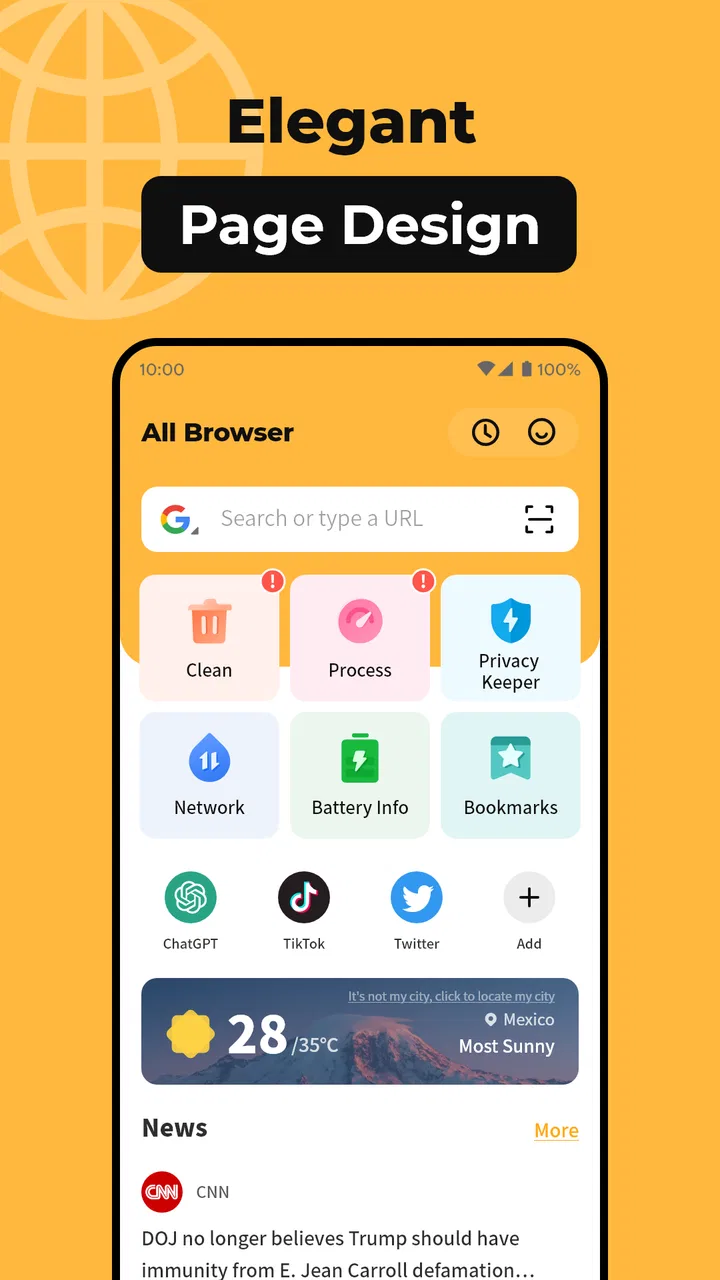
I approached All Browser as the kind of tool you install when you want to open a page without turning browsing into a project. It is a free Android app from Nullbyte Labs, placed in the tools category, and its appeal is easy to understand: the store summary presents it as a simple browser, while the short description reduces the idea even further to “All Browser.” That simplicity can be useful, but it also sets the right expectation. This is not an app I would choose because I want a large ecosystem or a long list of advanced extras. I would choose it when I want a straightforward way to browse.
After using it, my main impression is that the experience depends less on discovering hidden menus and more on getting the basics right: installing a compatible version, opening the app in a suitable network environment, and knowing whether a problem belongs to the browser or to the website itself. That distinction matters with lightweight tools. When an app has a deliberately narrow purpose, a failure to load one page can feel like a serious flaw even when the real cause is the connection, the page, or the device.
Where the experience can get stuck
The first point of friction is the gap between a simple browser and the expectations people bring from familiar alternatives. Most users have become used to browsers that synchronize activity, offer extensive privacy controls, manage downloads, translate pages, save passwords, and support a wide range of add-ons. A browser presented around simplicity may feel refreshing for a quick task, but it may also feel bare if you expect a complete replacement for your everyday browser.
You May Also Like

 Blood Strike: 2.5 Anniversary
Blood Strike’s Loadouts Turn Every Drop Into a Tactical Gamble
A close look at Blood Strike’s custom loadouts: how fast access to signature weapons reshapes its battle royale rhythm, rewards preparation, and narrows the gap between fights.

 Pandora - Music & Podcasts
Pandora’s Music Is Easy to Start, but Harder to Recover
Pandora’s strength is its low-effort path from a seed to a station. Its weak spot is how much confidence it asks you to place in connection, setup, and quiet recovery.

 8 Ball Pool
 Is Built on Rivalries, Rematches, and Routine
A close look at the rivalries, rematches, shared routines, and unanswered safety questions that turn a quick pool match into a persistent mobile community.

 Samsung Music
’s Quiet Strength Is Playing What You Already Own
Its reach comes less from spectacle than from dependable access to a personal library. That simplicity is both the app’s strongest retention engine and its ceiling.

 AccuWeather: Weather Radar
AccuWeather Review: A Quick, Clear Forecast for Everyday Decisions
For everyday plans, the best forecast is the one you can understand quickly. AccuWeather makes rain timing, radar, and local conditions easy to act on, with a few trade-offs.

 Hill Climb Racing
Why Hill Climb Racing Still Turns Crashes Into One More Run
A tiny car, a bumpy hill and one more upgrade: Hill Climb Racing keeps resurfacing because its simple chaos makes every near-miss feel personal.
More From Our News Desk
View All News


I would therefore begin with a very practical question: what do you need to do? If your routine is opening a news page, checking a public website, reading an online document, or following a link from another app, its focused approach may be enough. If your routine depends on a complicated account dashboard, frequent file handling, several open sessions, or browser-specific productivity features, I would test it carefully before making it your default.
Another common sticking point is interpreting a blank or slow page. A browser can appear unresponsive when the website is overloaded, the network is unstable, a captive Wi-Fi portal needs attention, or the page relies on behavior that does not work well in a lightweight environment. I do not treat one failed page as proof that the whole app is unreliable. I first try a different, familiar website. If that opens normally, the original page deserves closer suspicion.
The public response around the app is encouraging without being a guarantee. It has an average rating of 4.2 from around 16 thousand ratings, with over 5 million installs. I read those figures as evidence that the basic concept works for a substantial audience, not as proof that every device, website, or network will behave identically. A simple browser can be perfectly adequate for one person and a poor fit for another whose browsing habits are more demanding.
What I check before blaming the app
When a page refuses to open, I use a short sequence rather than repeatedly tapping the same control. I check whether other apps can reach the internet, switch between Wi-Fi and mobile data when possible, and try a second website. I also close the browser and reopen it, especially if the problem appeared after leaving it unused for a while. These steps sound basic, but they separate a temporary connection issue from a repeatable browser issue.
I also pay attention to the type of page involved. A simple public page and an interactive service are not equivalent tests. A page that asks for sign-in, displays embedded media, opens several layers of content, or depends heavily on scripts puts more pressure on compatibility than a text-focused page. If All Browser handles ordinary pages but struggles with one demanding service, I would not immediately replace it; I would decide whether that service is central to my daily use.
The app is rated for Everyone, which makes it approachable for general household use. That rating describes its audience classification, not a promise that every website opened through it is suitable for every person. I would still apply the same judgment I use with any browser: links, downloads, sign-in forms, and unfamiliar pages deserve attention regardless of the browser’s age rating.
Setup checks that save time
Installation is the first place where a little preparation helps. All Browser requires Android 8.0 or later, so I would check the phone or tablet’s Android version before troubleshooting anything else. If the operating system is older, repeated installation attempts will not solve the compatibility problem. On a supported device, I would make sure there is enough free storage for the installation and that the connection is stable while the app is being obtained.
The current version is 1.1.7, and that detail is useful when diagnosing behavior. If the app is already installed, I would check whether the device is running that current version before assuming a problem is permanent. I would also restart the device after an update if the app behaves strangely immediately afterward. A restart is not a sophisticated fix, but it clears temporary system conditions that can make a newly updated application appear less stable than it is.
Once installed, I prefer to test All Browser with a small, controlled routine. I open one ordinary public page, move to a second unrelated page, and then try the page I actually care about. This gives me a baseline. If the first two pages work and the third does not, I focus on the third page’s requirements. If none of them work, I investigate connectivity, the device, or the installation before judging the browser’s browsing quality.
The most useful setup habit is to establish a baseline before changing anything. Without that baseline, it is easy to clear settings, reinstall the app, or change networks without learning what actually fixed the problem. I would write down the simple facts mentally: does the app open, does a basic page load, and does the same page work elsewhere?
A sensible first-use routine
For a first session, I would avoid testing the app with the most complicated website I use. Start with a page that loads quickly and has a clear address. Then try a normal search or another public destination. Only after those steps would I sign in to an important service. This reduces the chance of confusing account trouble with browser trouble and gives a cleaner impression of the app’s basic behavior.
I would also avoid making it the only browser on the device immediately. Keeping a familiar alternative available is sensible while I learn how All Browser handles the pages I visit most. That is not a criticism unique to this app; it is a good migration approach for any new browser. The difference here is that its simple positioning makes a gradual trial especially appropriate. You can judge it by real tasks rather than by a long feature checklist.
Because it is free, the cost of testing is low. That does not eliminate the cost of switching habits, though. If you move bookmarks, saved credentials, or regular shortcuts from another browser, the process can be more important than the installation itself. I would begin with low-risk browsing, then decide whether it deserves a larger role after several ordinary sessions.
Recovering a workflow when something fails
My recovery method starts with the smallest change. If a page stalls, I try loading it again once, then test another page. If the whole app feels frozen, I close and reopen it. If the issue continues, I restart the device and test the same page in another browser. Each step answers a different question: was the request temporary, is the app stuck, is the device involved, or is the website itself the likely cause?
I avoid changing several things at once. Reinstalling, switching networks, clearing application data, and changing browser preferences in one burst may produce a result, but it leaves no useful explanation. A more disciplined workflow is slower by a minute and faster over the long term. Change one condition, repeat the same test, and note whether the behavior changes.
For an everyday example, imagine that I am standing outside a café and need to open a ticketing page from a message. All Browser launches, but the page remains incomplete. I would first check whether the café network requires a sign-in screen. I would open another public page, then retry the ticketing page. If other sites work but the ticket page does not, I would use a familiar browser as a comparison and, if necessary, complete the purchase there. The practical goal is not to prove which app is at fault; it is to finish the task safely without repeatedly submitting forms.
That last point is important with payment, booking, and account pages. If a page appears stuck after pressing a button, I would verify whether the action completed before pressing it again. I might check for a confirmation message, an email, or the account’s activity from another route. A browser problem and a delayed server response can look similar, and duplicate submissions are more troublesome than a delayed page.
Separating a browser issue from a website issue
A useful comparison is to repeat the same action under the same network conditions in another browser. If the page fails in both, the website or connection is the stronger suspect. If it works elsewhere but consistently fails in All Browser, compatibility becomes more likely. Even then, I would look for a pattern: does the failure occur only after sign-in, only on pages with media, or only when a form is submitted?
This kind of pattern is more valuable than a vague statement that the browser “does not work.” It tells me whether All Browser is unsuitable for one important service or unsuitable for my general browsing. The first situation may be manageable with a second browser. The second means I should choose a different primary tool.
I would also distinguish slow loading from missing content. A weak connection can eventually display a page, while a compatibility problem may leave a particular element absent every time. Repeating the test at another time or on another network can help. I would not promise that these checks solve every problem, but they provide a safe, general way to avoid misdiagnosis without inventing settings or capabilities that may not exist in the app.
When the app is not the right cause—or the right choice
All Browser is not automatically the best answer for every browsing job. If I need deep synchronization between devices, extensive account management, a mature collection of privacy controls, or specialized desktop-style tools, I would lean toward a larger established browser. Those alternatives may be heavier, but their extra complexity can be worthwhile when browsing is part of work rather than a quick utility.
I would also hesitate to use it as my only browser for services that I cannot afford to troubleshoot. A work portal, school system, banking site, or travel account deserves a compatibility test before I depend on it. If the service behaves perfectly during repeated normal tasks, that concern fades. If it fails at a key step, the sensible choice is to keep another browser for that service rather than forcing a lightweight tool into a role it may not suit.
On the other hand, a larger browser is not always better. More features can mean more menus, more background behavior, more settings to maintain, and a less direct path to a simple page. For someone who wants a clean tool for occasional browsing, All Browser may be easier to understand than a feature-heavy alternative. The trade-off is clear: less apparent complexity can be pleasant, but it may leave fewer options when something unusual happens.
There is also a difference between privacy expectations and privacy assumptions. A simple interface should not be interpreted as a complete privacy strategy. I would still avoid entering sensitive information on suspicious pages, inspect addresses carefully, and use account security practices that do not depend solely on the browser. If advanced privacy configuration is a deciding factor for you, compare those controls directly with a browser known for them rather than choosing on appearance alone.
Who will get the most from it
I see All Browser fitting people who want a free, uncomplicated tool for opening links and visiting ordinary websites on a supported Android device. It may be useful on a secondary phone, for occasional browsing, or for someone who finds large browsers distracting. Its tools-category positioning also makes sense for users who view browsing as a practical utility rather than a central digital workspace.
I would be more cautious recommending it to someone who works across several devices, depends on a complex web application, or expects a polished answer to every browsing edge case. That person should compare it directly with the browser already handling those tasks. The right question is not whether All Browser has a high enough rating to replace everything; it is whether it completes the pages and workflows that matter to you.
Nullbyte Labs has kept the product’s public identity focused, and that focus is both its attraction and its limitation. I appreciate not being pushed toward a complicated setup for a basic task. At the same time, I would not confuse a low-friction starting point with a full set of professional browsing tools. My recommendation changes depending on whether “simple” describes your need or describes a compromise you are willing to tolerate.
My practical verdict after testing the fit
All Browser makes the most sense when you want a free, direct way to browse on Android 8.0 or newer and your expectations are modest. The app is easy to position: use it for ordinary pages, links, and quick checks; test important services before relying on it; and keep a proven alternative available for demanding websites. That approach gives its simplicity room to help without asking it to solve every browsing problem.
The adoption figures and 4.2 average suggest that many people find the basic experience worthwhile, but my own recommendation is more specific than those numbers. I would install it for a secondary browsing role or as a clean alternative to a crowded browser. I would not move every saved workflow on day one. First I would test the pages I use most, especially sign-in forms and services where a failed action could matter.
Version 1.1.7 is the version I would look for when checking the installation, and the Everyone rating makes it suitable for general audiences in terms of classification. Those details make the app approachable, but they do not remove the need for sensible browsing habits or compatibility checks. The strongest practical tip is to judge it with your own routine rather than with a single successful page or a single failed one.
My final view is favorable but measured. If you want a lightweight-feeling browser for straightforward Android browsing, All Browser is worth trying because the barrier to entry is low and the purpose is clear. If you need synchronization, advanced controls, or dependable support for complicated web applications, a more established alternative is probably the better primary choice. Use All Browser where its simplicity is an advantage, not where that simplicity becomes a limitation.
FAQs for All Browser
01What is All Browser, and what can I use it for?
All Browser is a mobile web-browsing application designed to give users quick access to websites, online services, videos, social networks, and search tools from one place. Its main appeal is convenience, especially for people who want a straightforward browser with commonly used browsing features. Before downloading, users should check the app’s current compatibility, supported devices, and whether its feature set meets their privacy and performance expectations.
02Does All Browser protect my privacy while I browse?
All Browser may include standard browsing protections, but users should not automatically assume that every activity is fully private or anonymous. Website data, cookies, browsing history, permissions, and advertising practices can vary depending on the app version and device settings. Before using it for sensitive accounts or personal information, review its privacy policy, requested permissions, tracking options, and available tools for clearing history and stored browsing data.
03Is All Browser free to download and use?
All Browser may be available as a free download, although the exact pricing model can depend on the platform, region, and current version. Free apps can sometimes include advertisements, optional purchases, or limitations on certain functions. We recommend checking the official Google Play Store or Apple App Store listing before installation to confirm whether the app contains ads, offers subscriptions, or requires payment for additional browsing features.
04Does All Browser work well on older Android or iOS devices?
Compatibility and performance depend on the device model, operating system version, available storage, and the complexity of the websites being opened. On newer phones, browsing should generally feel more responsive, while older devices may experience slower page loading, higher memory use, or occasional crashes. Check the application’s store listing for minimum system requirements and keep both the app and operating system updated for better stability.
05Can I safely download All Browser from third-party websites?
The safest way to install All Browser is through the official Google Play Store or Apple App Store, where the application listing, developer information, ratings, and update history can be reviewed. Downloading an APK or modified version from an unofficial website can expose your device to malware, unwanted permissions, or altered functionality. Avoid suspicious download links, verify the developer name, and review permissions before completing installation.
Pros
- Simple interface makes everyday browsing quick to understand.
- Supports multiple tabs for switching between websites efficiently.
- Pages load smoothly on most modern Android devices.
- Useful privacy options help limit unwanted tracking.
- Lightweight design uses less storage than many full browsers.
Cons
- Some advanced desktop browser features may be unavailable.
- Ad-blocking performance can vary between websites.
- Older devices may experience occasional slowdowns with many tabs.
- Sync options may be limited compared with larger browser brands.
- The app may display occasional promotional content or recommendations.

All Browser
Gallery